Research

We design integrated circuits and systems operating at up to terahertz, advancing the next generation of sensing, metrology, security, and communication.

Imaging and Radar

A radar that fits on a credit card, sees through fog, and resolves millimeter-scale features at automotive distances would change how machines perceive the world. LiDAR is precise but fails in degraded weather; microwave radar is robust but bulky. The sub-terahertz band sits at the sweet spot — short enough wavelengths for compact apertures, long enough for atmospheric transparency. Realizing it in silicon CMOS requires solving three coupled problems: pushing chirp bandwidth near the transistor cutoff, duplexing TX and RX without inherent loss, and steering the beam across a wide field of view without mechanical scanning.
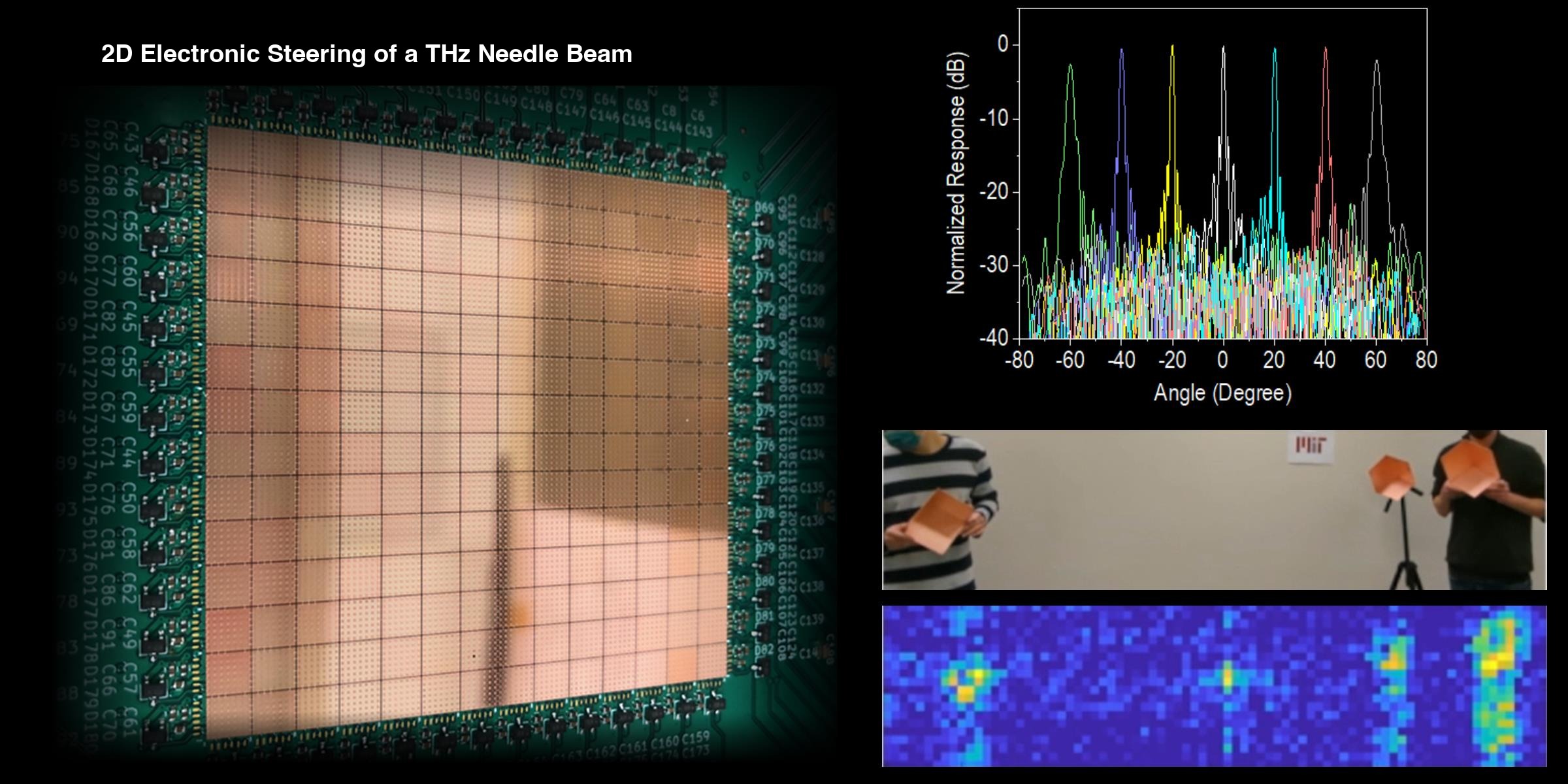
Representative figure for Imaging and Radar

Representative publications

ISSCC 2026 JSSC 2024 JSSC 2022 ISSCC 2022 ISSCC 2022 JSSC 2021 ISSCC 2020 JSSC 2015 JSSC 2013
Quantum Information and Sensing

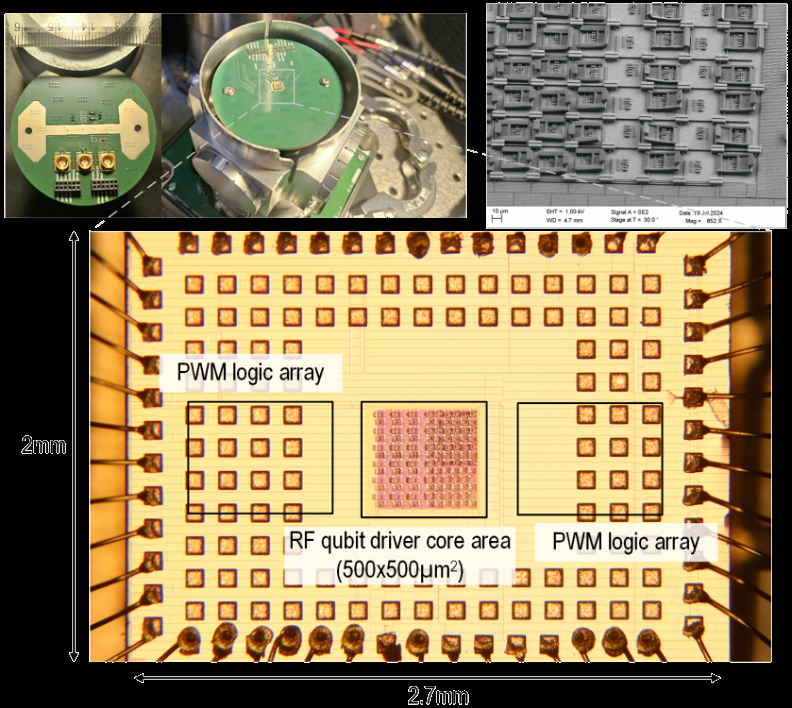
Scaling quantum computers from today's tens of qubits to the millions required for error-corrected machines is increasingly a classical hardware problem: how to control, read out, and connect quantum processors at cryogenic temperatures without flooding the system with heat or wires. We bring silicon CMOS to that interface. Our chips integrate scalable quantum magnetometers based on diamond nitrogen-vacancy centers, cryo-CMOS controllers that drive color-center qubits at 4 K, and wireless terahertz datalinks that replace coaxial cables between cold quantum processors and room-temperature classical control — approaching the fundamental thermodynamic limit of information transfer in the process.

Representative figure for Quantum Information and Sensing

Representative publications

ISSCC 2026 NatElec 2025 CICC 2024 ISSCC 2023 TQE 2023 CLEO 2022 JSSC 2021 NatElec 2019 ISSCC 2019

THz Spectroscopy and Molecular Clocks

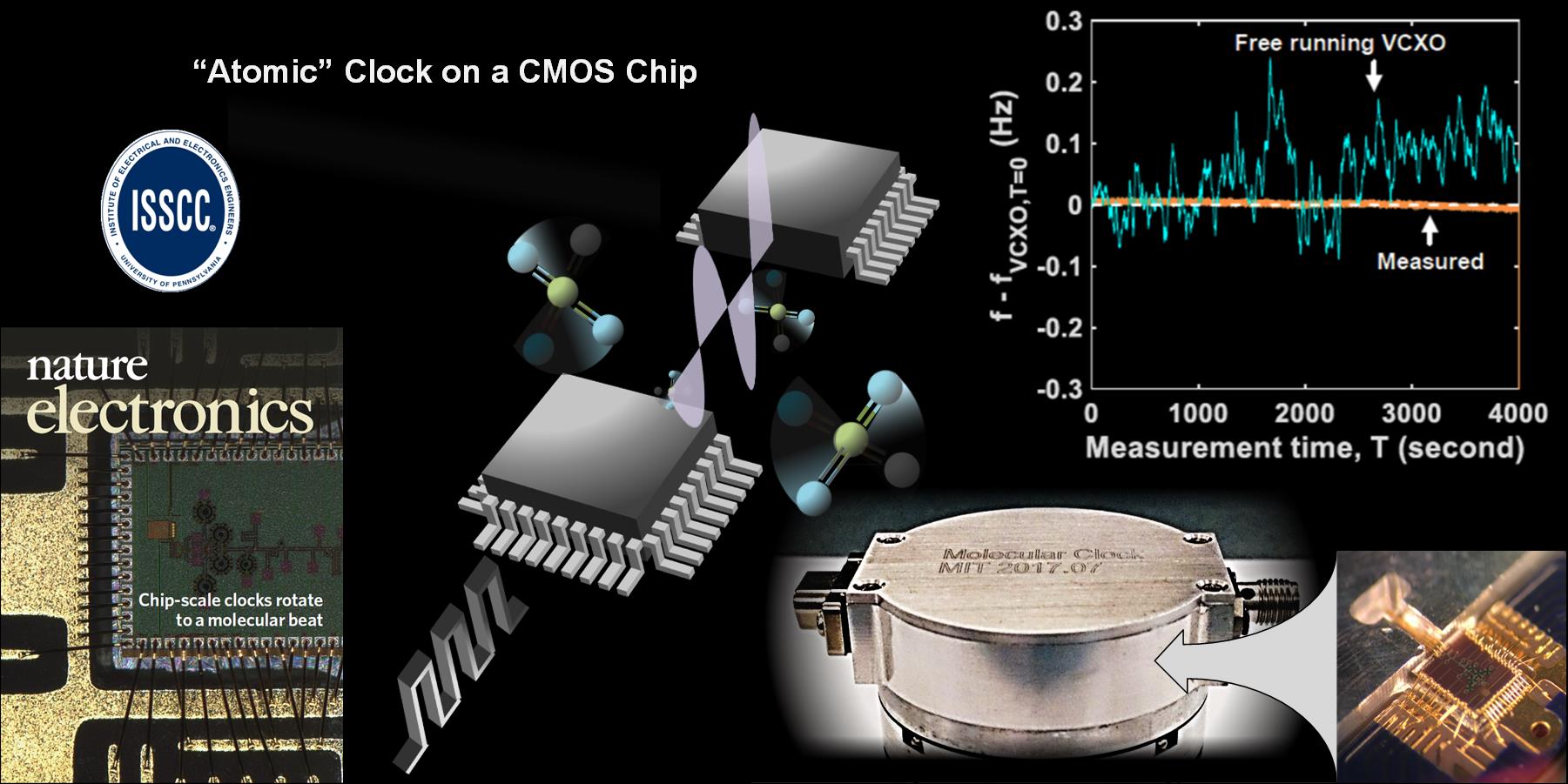
Polar molecules have rotational transitions in the sub-terahertz band that are sharp, immune to environmental perturbation, and identical for every molecule of a given species anywhere in the universe — making them ideal references for both precision timekeeping and chemical identification. Today's atomic clocks and laboratory spectrometers exploit this physics but require benchtop instruments. We build the same capability into silicon. By integrating broadband sub-THz sources, high-harmonic interrogation, and frequency-comb spectrometers on CMOS, our chips lock to molecular rotational lines for atomic-clock-grade timing, and scan hundreds of GHz of bandwidth to identify trace gases — bringing molecular spectroscopy to chip scale.

Representative figure for THz Spectroscopy and Molecular Clocks

Representative publications

RFIC 2022 IFCS 2021 JSSC 2021 ISSCC 2020 JSSC 2019 NatElec 2018 JSSC 2017 ISSCC 2017 JSSC 2013

Hardware Security

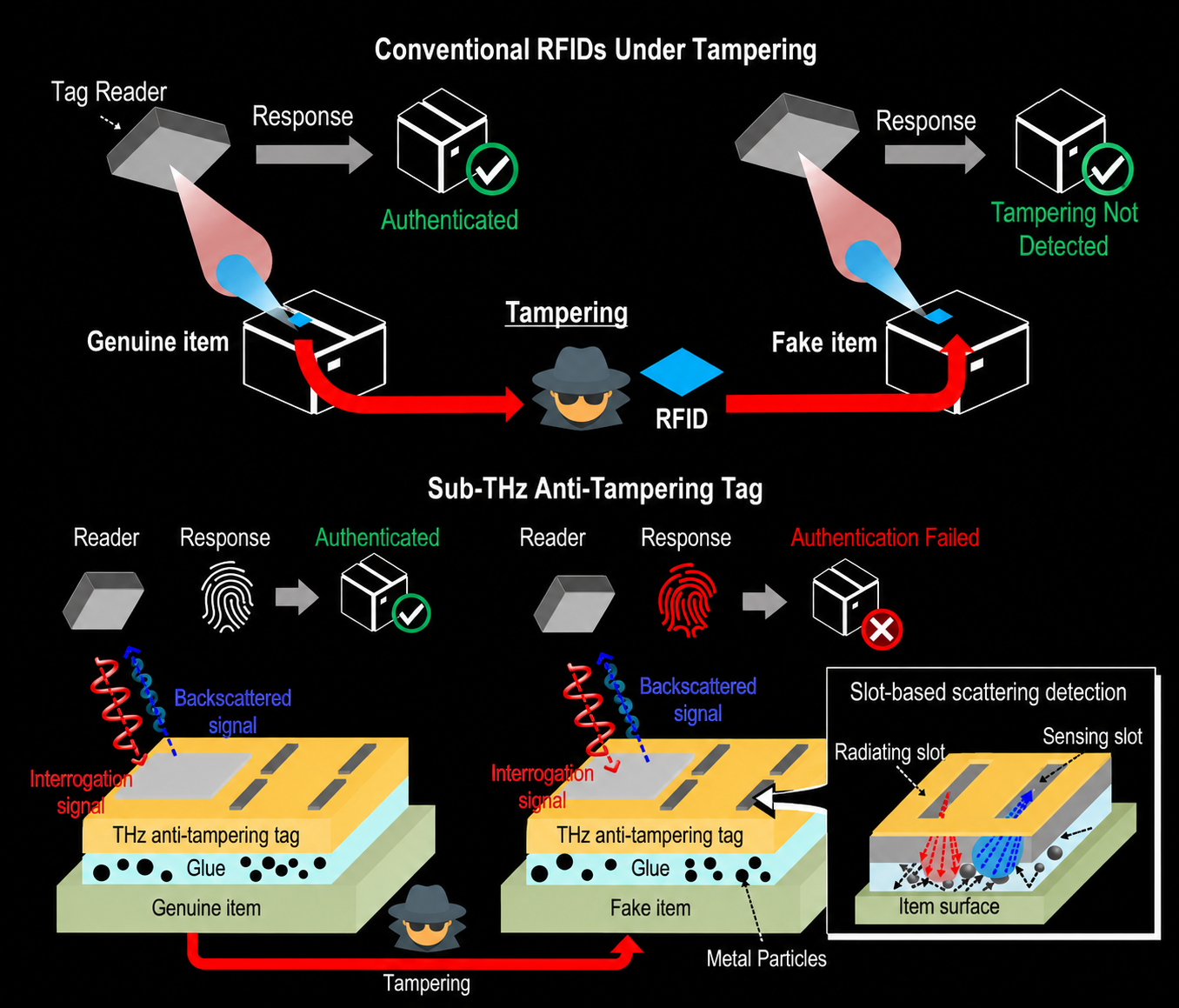
As chips spread into every supply chain, payment terminal, and connected device, the attack surface has moved from the algorithm to the silicon itself — counterfeit components, tampered packages, side-channel leakage, and physical replay all bypass conventional cryptography. We exploit sub-terahertz waves to push security down to the physics layer. Wavelengths near 1 mm interact with chip-scale features in ways too small to clone, sense, or substitute: package-less identification tags use backscatter at 260 GHz for unforgeable authentication, anti-tampering tags read unclonable scattering signatures at the chip-item interface, and orbital-angular-momentum modes carry signals with inherent eavesdropping resistance. Beyond crypto, the chip itself becomes the root of trust.

Representative figure for Hardware Security

Representative publications

ISSCC 2026 RFIC 2025 ISSCC 2024 JSSC 2024 SiPS 2022 JSSC 2022 JSSC 2021 ISSCC 2020

THz Communication and Interconnect

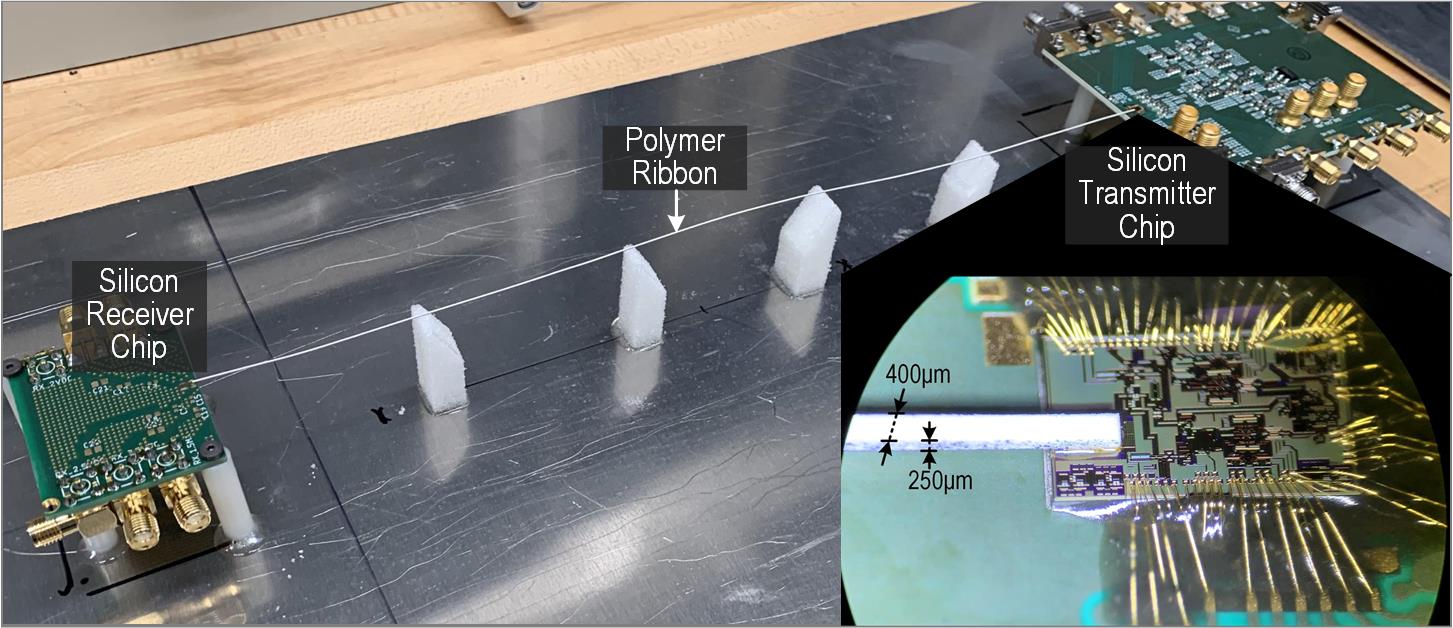
As digital systems scale to deliver hundreds of gigabits per second between chips, between racks, and between cryogenic and room-temperature stages of quantum machines, the interconnect has become the bottleneck — copper traces lose signal at higher frequencies, and adding more parallel lanes burns area and power. The sub-terahertz band opens a clean path: wavelengths near 1 mm fit on a chip, can be steered with on-die antennas, and propagate efficiently through plastic dielectric waveguides without the electrical loss and return-current management of conventional metal lines. We build the integrated circuits that close those links. Our CMOS and SiGe chips drive 105 Gbps over a single dielectric waveguide, transmit and detect orbital-angular-momentum modes to spatially multiplex channels at 0.31 THz, sustain in-band full-duplex operation from 300 K down to 4.2 K, and integrate microwatt-class wake-up receivers so always-on links don't drain the battery.

Representative figure for THz Communication and Interconnect

Representative publications

NatElec 2025 JSSC 2024 CICC 2023 JSSC 2022 JSSC 2021 ISSCC 2021 RFIC 2021 TMTT 2017